April 06, 2026

Post written by: David Ward
The hospitality industry isn’t exactly lacking in technology.
Most teams are surrounded by systems — PMS, POS, booking platforms, loyalty tools, staffing software, reporting dashboards — each designed to solve a specific problem. For the most part, each tool does exactly what it’s supposed to.
So why are more tools actually making everyone’s job harder? Take it from a software engineer as well as a CEO — the way software is adopted in hospitality often creates more fragmentation instead of flow.
What Is Hospitality Management Software? (and What People Get Wrong)
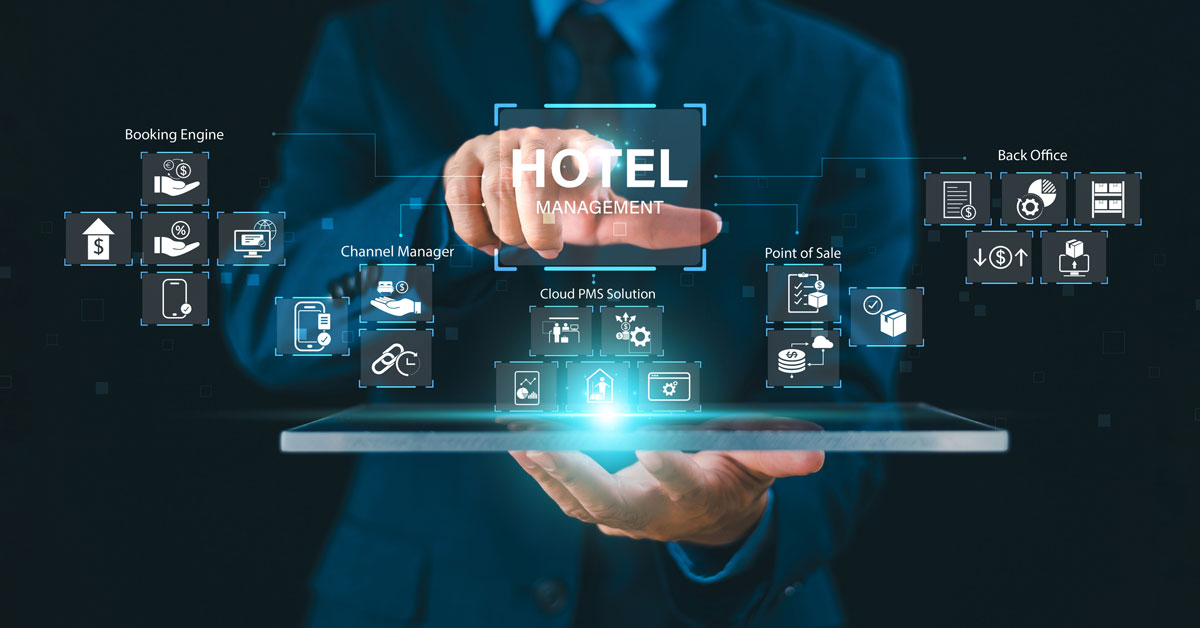
Hospitality management software refers to the collection of systems hospitality organizations use to run their business — everything from bookings and guest data to operations, staffing, and reporting.
Here’s what gets confusing: It’s often talked about as if it’s a single solution.
In reality, most hospitality organizations rely on multiple specialized tools, such as:
- Reservation and booking systems
- Point-of-sale and transaction platforms
- Guest profiles, CRM, and loyalty tools
- Operational systems for housekeeping, maintenance, or service
- Staffing, scheduling, and time tracking
- Reporting and performance dashboards
The Real Problem Isn’t the Tools — It’s How They Work Together
Ever wanted to be a fly on the wall in a high-level software development meeting?
I’ll let you in on a little secret. When hospitality teams talk about their biggest challenges, they rarely start with software.
At our first meeting, they tend to talk about:
- Staff feeling overwhelmed or frustrated
- Inconsistent guest experiences across locations or shifts
- Leaders lacking confidence in the data they’re seeing
- Manual workarounds that slow everything down
On the surface, these look like separate problems. In reality, they often trace back to the same root issue: systems that don’t work together in a meaningful way.
Each tool might do its job well in isolation. But when data doesn’t move cleanly between systems, teams are forced to bridge the gaps themselves — usually with spreadsheets, duplicate entry, or institutional knowledge that only a few people hold.
4 Problems That Common Hospitality Software Fails To Solve
A hotel chain doesn’t have the same workflows as an airline, an excursion business, or a high-end spa.
But across the hospitality industry, no matter which solutions each business is using, we see a lot of the same patterns.
1. Tools That Don't Match Real Workflows
Many off-the-shelf solutions are designed around idealized processes — not how hospitality teams actually operate day to day.
The result is low adoption, long training times, staff frustration, and constant workarounds.
2. Limited Visibility Across the Operation
When systems don’t share data reliably, leaders end up with reports that are delayed, incomplete, or contradictory. Decisions become reactive instead of strategic.
3. Friction Between Teams
Front desk, operations, finance, marketing, and leadership often rely on different tools. When those tools don’t align, each team sees an entirely different piece of the puzzle.
Here’s how that tends to play out:
- Operations sees delays and breakdowns during handoffs, and wants to invest in new workflows or process changes
- IT sees fragile integrations and data gaps, and looks for upgrades or point-to-point fixes
- Marketing sees inconsistent guest engagement and wants to invest in a new CRM or messaging tools
- Leadership sees limited visibility and wants to invest in dashboards and reporting
Each response makes complete sense in isolation.
But unless leadership understands that they’re all reacting to the same root issue — systems that don’t work together — then teams end up competing for limited resources.
Unfortunately, no matter who “wins,” when a fragmented system remains fragmented, additional tools don’t solve the problem. Instead, they tend to add more and more complexity.
4. Getting Stuck in the Current State
After living through a few too many disruptive or over-budget technology projects, many teams hesitate to touch systems that are “working well enough,” even when they’re holding the business back.
That fear makes sense, which is why we understand that when we meet with hospitality teams, getting alignment on the problem, the solution, and exactly how we’ll work together to make sure that adding software doesn’t add risk.
How and When Those Problems Become Unmanageable
As hospitality organizations grow — adding locations, services, or new guest expectations — the workarounds stop working. And the cracks between systems start to widen.
What once felt manageable becomes:
- Slower onboarding for staff
- More inconsistency in guest experience
- Increased operational risk
- Less confidence in decisions
At that point, adding another tool rarely fixes the problem. It often adds to it.
A Better Approach To Travel and Hospitality Software Development

Instead of asking, “What software do we need?” the better question is often:
“How are our systems working together today — and where are they creating friction?”
When teams focus on:
- Aligning systems behind the scenes
- Designing technology around real workflows
- Improving how data moves across the organization
The impact shows up everywhere:
- Staff have smoother, less stressful days
- Leaders gain clearer visibility
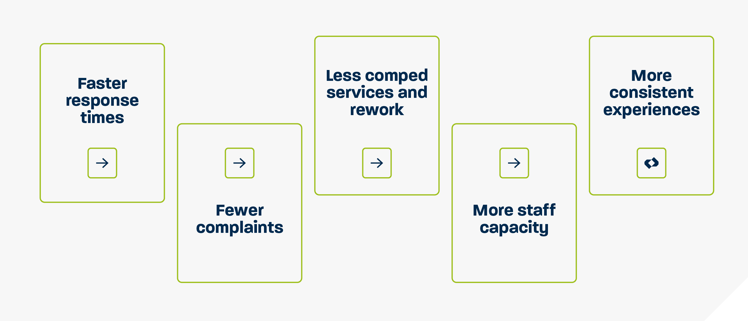
- Guest experiences become more consistent and thoughtful
Often, the most effective improvements don’t come from replacing everything, but from connecting and refining what’s already there.
When Travel and Hospitality Software Development Services Bring More ROI
First off, I’d like to start off by saying that off-the-shelf tools DO play an important role in hospitality. In many cases, they’re the fastest and most cost-effective way to support standard processes.
But there’s a point where adding another tool stops solving problems and starts creating more.
Custom hospitality software services tend to make the most sense when the gaps between systems become more costly than the systems themselves.
Here are a few clear signals it may be time to look beyond packaged solutions.
1. Teams Are Relying on Workarounds To Get Through the Day
If spreadsheets, notes, or verbal handoffs are essential to keeping operations moving, that’s a sign systems aren’t supporting how work actually happens.
Custom solutions can help:
- Eliminate duplicate data entry
- Reduce reliance on tribal knowledge
- Make critical information available where and when it’s needed
2. The Same Information Must Be Entered in Multiple Systems
When staff are re-entering guest details, service requests, or operational updates across tools, errors and delays are just a fact of life.
Targeted custom development is often the most effective way to:
- Connect existing systems
- Ensure information entered once can be trusted everywhere
- Improve speed and consistency without replacing core platforms
3. Growth Is Exposing Cracks in the Operation
What worked at one location or one level of volume often breaks down as organizations grow.
Custom solutions can help hospitality teams:
- Scale operations without scaling chaos
- Maintain consistency across locations, teams, or services
- Improve visibility as complexity increases
4. You Need Clarity Before Making the Next Big Investment
Sometimes the signal isn’t operational pain. It’s uncertainty.
Not every software engineering firm works this way, but when we partner with clients, our thorough discovery process helps leadership understand:
- Where friction actually originates
- Which improvements would deliver the most impact
- How to sequence changes without disruption
Then the next step isn’t just about buying software — it’s getting clarity.
5. You Can't Provide Competitive, Consistent Guest Experiences
If your team knows what would improve the guest experience — but existing software can’t support it without heavy compromise — that’s one of the strongest use cases for custom software development.
Custom hospitality software services can:
- Support unique workflows or experience moments
- Fill gaps off-the-shelf tools weren’t designed to handle
- Enable personalization and coordination without adding complexity
Or, to put it another way, competitive advantage lives precisely where off-the-shelf software falls short.
Curious About How Hospitality Software Can Help You Provide Elite Guest Experiences?
You’re always welcome to request a complimentary consultation with our leadership to explore possible solutions.
However, after attending The Hospitality Show in Denver in 2025, we wanted to put something together that addressed one of the biggest challenges facing hotel executives — how to consistently meet and exceed evolving guest expectations while simultaneously reducing the burden on their staff.
So our entire team put their heads together to create a comprehensive guide.
Click the link below to get your free copy!

Topics: Software Development | Hospitality